
Solar Science: Where Does Your Solar Power Go During a Grid Blackout?
Have you ever wondered what happens to your solar energy during a power outage? (provided you have a system that allows backup)
Picture this: The grid goes down, your home backup battery is 100% full, and the sun is beating down on a cloudless afternoon. Your house isn’t using much electricity, and because the grid is offline, you can’t export your excess power.
Where does all that extra solar energy go?
The short answer: It doesn’t go anywhere. It’s simply never created.
Let’s dive into the fascinating science of how your solar system manages itself when it has nowhere to send its power.
Real-World Case Study: The 16kW System in Lockdown
To understand this in action, let’s look at data from a real customer dashboard during a recent local grid outage.
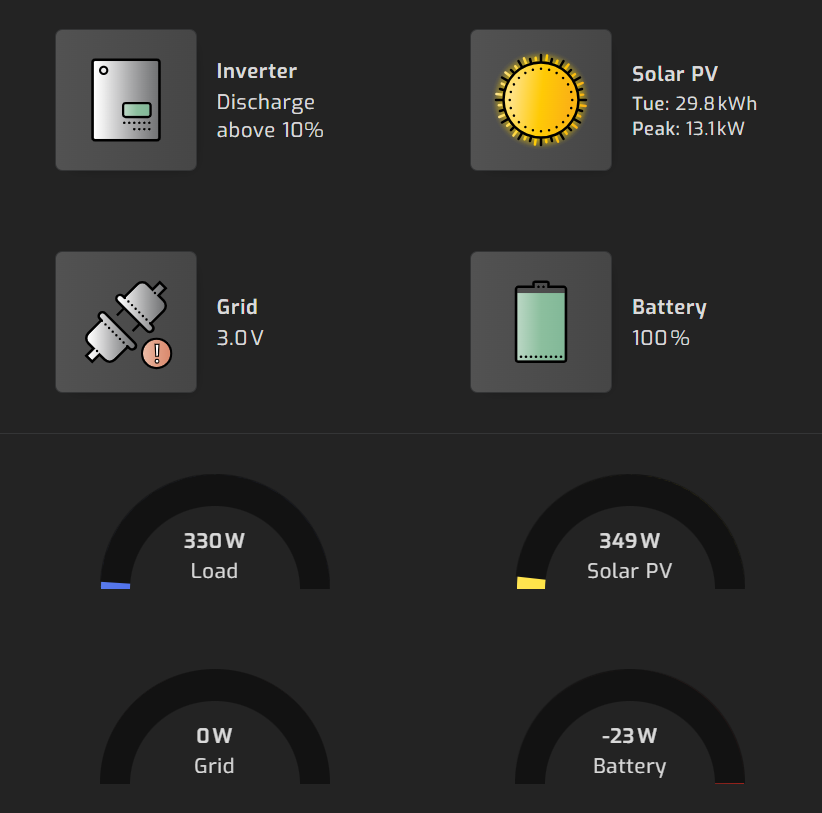
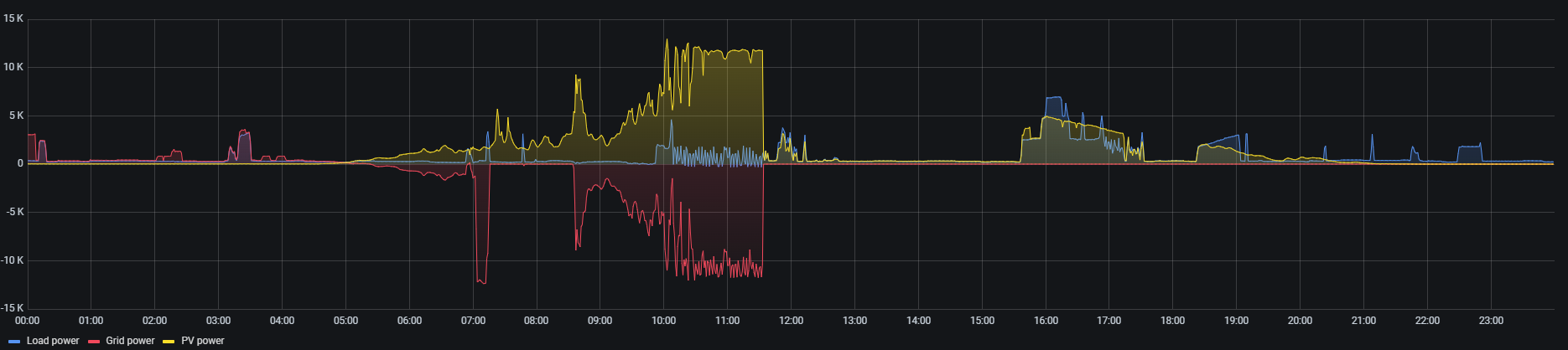
This home features a massive 16.0 kW solar array that had already peaked at an impressive 13.1 kW earlier in the day. But take a look at what the system was doing the moment the grid went offline:
Grid Power: 0 Watts (The grid is completely dead)
Battery Storage: 100% Full (It cannot accept any more energy)
House Load: 330 Watts (The baseline power running the fridge and minor appliances)
Solar PV Generation: 349 Watts
Why did a system capable of generating 13,000+ watts plummet to just 349 watts?
Enter "Curtailment": The Self-Regulating Solar Brain
Solar panels don't just blindly force electricity into your home. Instead, they operate strictly on a demand-only basis, managed entirely by your intelligent inverter.
When the smart inverter detects that the grid is down and the battery is full, it dynamically "throttles back" the solar panels. It essentially tells the system: "Whoa, slow down. We have nowhere to put this energy right now."
Where does the sunlight go? The unused solar energy isn't wasted or trapped; it simply reflects off the panels as light or dissipates safely as a tiny amount of ambient warmth.
What Happens if You Turn on the Kettle?
If the system is throttled, what happens when you suddenly need power? Let's say you decide to boil the kettle or turn on the oven.
Instant Reaction: The second you introduce a heavy appliance load, the inverter reacts in mere milliseconds.
Releasing the Throttle: It signals the solar panels to instantly ramp up production to match the new demand.
Seamless Transition: Your appliance runs smoothly, your lights stay on, and your home remains completely independent of the outside world.
The Power of True Energy Independence
Investing in a modern solar-and-storage setup isn't just about shaving money off your monthly utility bills. It’s about putting a brilliant, self-regulating, miniature power plant on your roof.
Whether the grid is perfectly stable or completely offline, an intelligent energy system ensures you only produce exactly what you need, exactly when you need it.
Ready to secure your home's energy future?
If you want to protect your household from the next blackout with an intelligent, self-regulating solar system, contact our team today for a custom quote.